Can Gift Bouquet Stems Grow into New Plants?
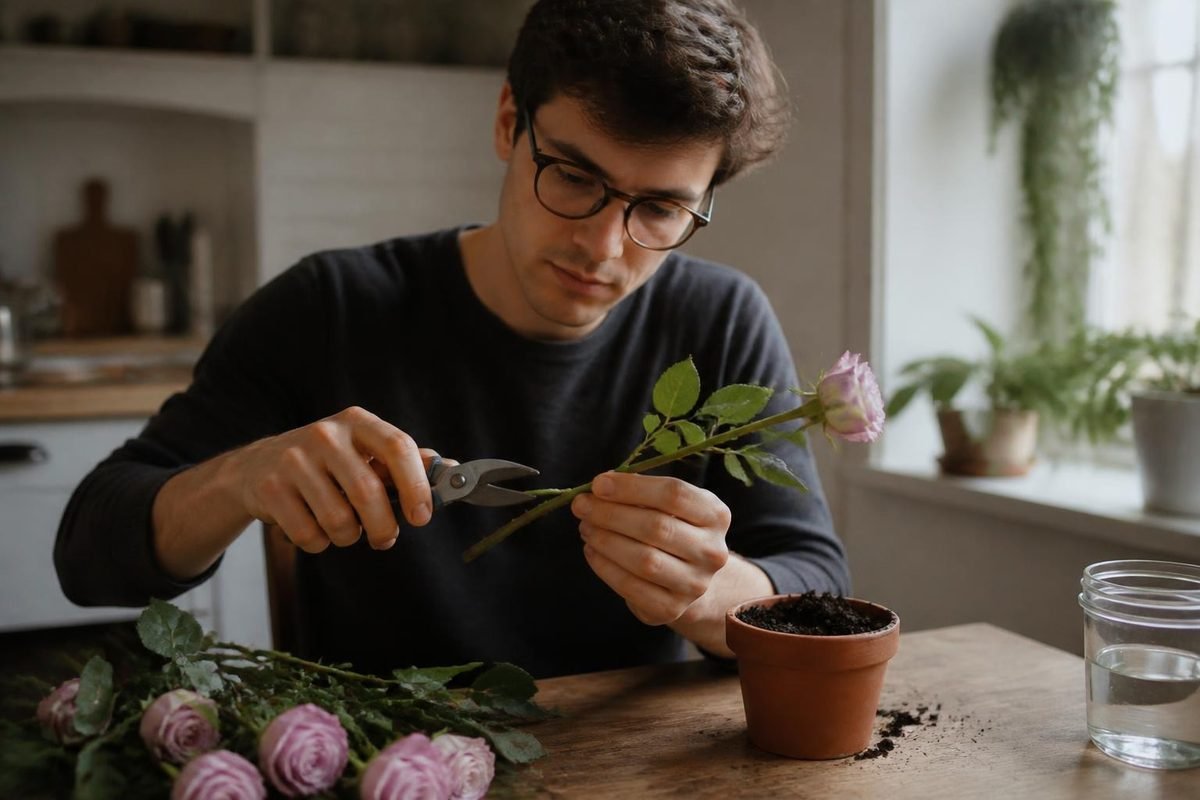
Roses, carnations, chrysanthemums and hydrangeas may grow from cuttings taken from gifted flowers, but success is less predictable than with fresh stems from a garden. Your best chance is a healthy, firm stem with leaves and visible nodes, the places where leaves meet the stem.
Pick flowers that can root
Roses are a familiar option. Choose a green, sturdy stem with several healthy leaves and nodes. Remove its flower before planting because the cutting can then put its energy into forming roots instead of supporting the bloom.
Carnations and chrysanthemums can also produce roots from stem pieces. If the bouquet includes side shoots without flowers, try those too. Hydrangeas may root, but a stem that has sat in a vase for several days is a poorer choice than a fresh shoot.
Some flowers are not suited to this method. Tulips, daffodils and other bulb flowers grow from bulbs rather than from pieces of cut stem, so a tulip in a vase will not produce a new bulb.
Assess the stems before cutting
Begin as soon as possible, since time in a vase can reduce the chances of success. Look for stems that are green and firm, and reject any with slimy areas or rot. Stems that have dried out completely or stood for a long time in cloudy vase water are also poor candidates.
Make sure the stem has at least one visible node that can go into the rooting mix. A plain stretch of stem without nodes is unlikely to work. Until you are ready to prepare the cuttings, keep the promising stems in clean water so they do not dry out.
Make and plant each cutting
Gather clean, sharp scissors or pruners, a small pot with drainage holes, and moist, free draining rooting mix. Clean cutting tools matter because they reduce the chance of bringing rot into the plant material.
- Cut a healthy stem into a piece about 10 to 15 centimetres long. Make the bottom cut just below a node, so that node can sit in the mix.
- Take off the flower and the lower leaves. Keep a few leaves near the top, but do not let them touch the mix.
- Push the lower node into the moist mix, then gently press the mix around the stem to hold it in place.
- Set the pot somewhere bright but out of direct light. A clear plastic bag held above the leaves can retain humidity, which helps keep the cutting from drying.
- Keep the mix lightly moist rather than soaked. Check the cutting often and remove any that turn soft or develop mould.
Wait for roots before moving it
Roots may take several weeks or longer to appear. New leaves do not prove that roots have formed, because the cutting may draw on stored energy to grow. After a few weeks, a very gentle tug may show resistance from roots. Do not pull hard, as young roots are easy to damage.
When a cutting has a good root system, transfer it to a pot filled with ordinary potting mix. If it has been covered with a bag, gradually get it used to normal room conditions. Not every cutting will take, so trying several suitable stems gives you a better chance of success.
Questions about rooting bouquet stems
Can bouquet stems root in water?
Some can form roots in clean water, while others may rot. Moist rooting mix is a useful alternative, particularly for rose cuttings.
Is rooting hormone essential?
No. Cuttings can root without hormone, although a product made for plant cuttings may help. Follow the directions on its label.
Keep reading: flowers at home